 scim.cloud
Object Model
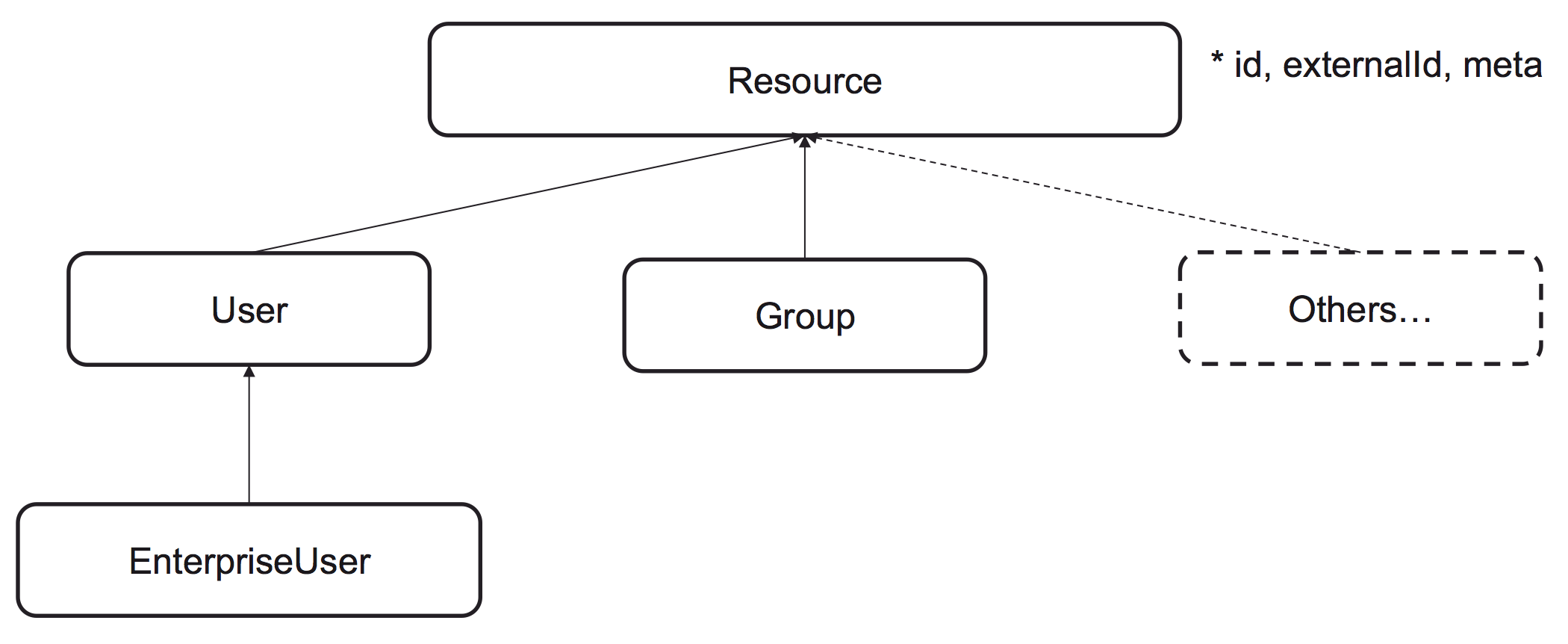
Every SCIM object derives from a common Resource type.
SCIM 2.0 is built on an object model where a Resource is the common denominator and all
SCIM objects are derived from it. It has id, externalId, and
meta as attributes, and
RFC 7643
defines User, Group, and EnterpriseUser that
extend the common attributes.
Common attributes
- id
- A unique identifier assigned by the service provider. Immutable, and never reused across resources.
- externalId
- An identifier assigned by the client, letting a provisioning client correlate the resource with its own record for the same identity.
- meta
-
Resource metadata maintained by the service provider:
resourceType,created,lastModified,location, andversion— the last of which is the entity tag used for concurrency control.
Attribute types
Attributes come in three shapes, and you will see all three in the Example User:
- Simple — a single value, such as a string for
userName. - Complex — an attribute with sub-attributes, such as
nameoraddress. - Multi-valued — a list of values, such as
emailsorphoneNumbers, where each entry may carry atypeand aprimaryflag.